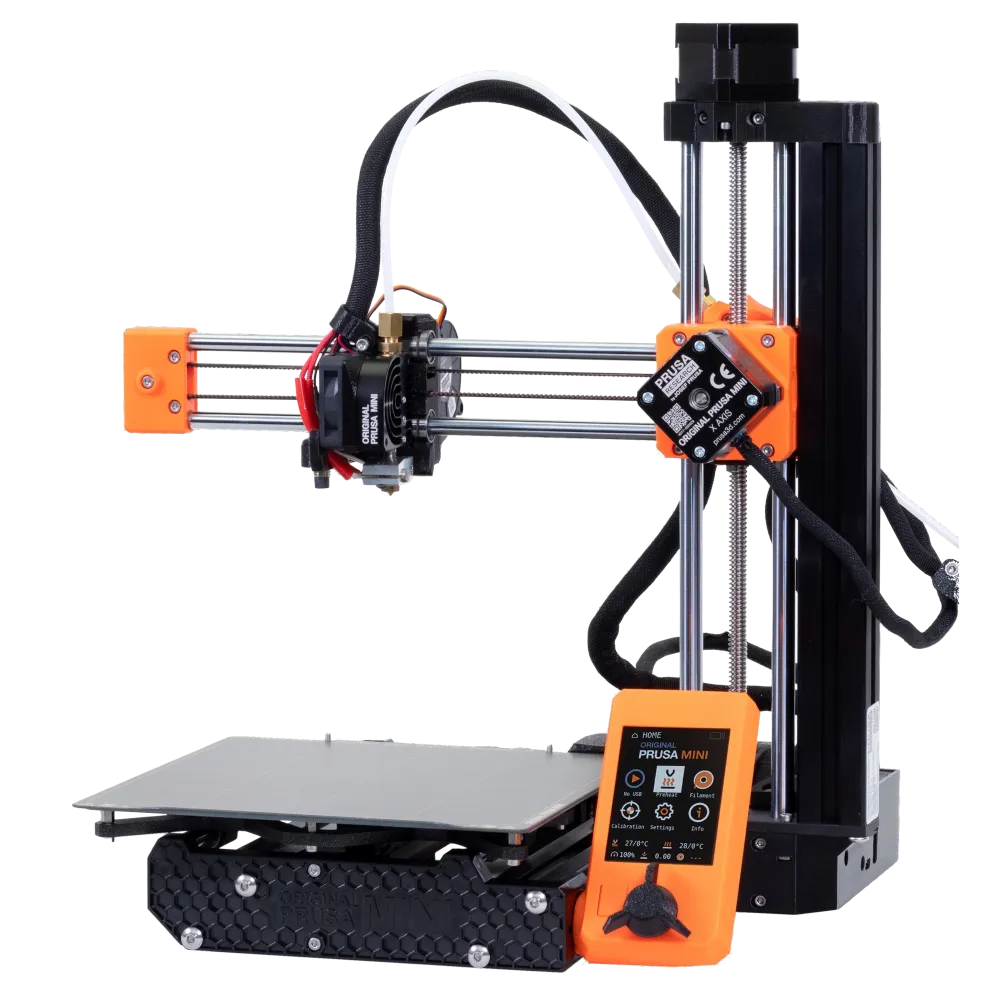
Prusa MINI+
CAUTIONThis printer appears overdue for replacement, refresh, or discontinuation. If found at a strong discount and the printer still fits your needs, it may be worth comparing against newer alternatives.
Data refreshed: 16 May 2026
Where to buy
Specifications
- Build volume
- 180x180x180 mm
- Build size class
- Extra-small - Hand-held Parts
- Price
- €509 (solo)
- Enclosure
- Full enclosure
- Chamber control
- None
- Materials
- ABS · ASA · HIPS · Nylon (PA6/PA12) · PETG · PHA · PLA (all variants) · PVB · TPU · TPC · TPE
- Support materials
- —
- Bowden nozzle
- —
- Max hotend temp
- 280°C
- Max bed temp
- 100°C
- Max chamber temp
- —
- Nozzle material
- Brass
- Hardened nozzle
- —
- Nozzle count
- 1
- Max filament inputs
- 5
- True multi-material
- —
- Tool change
- Single Nozzle Purge Based
Ownership
- Experience level
- Intermediate
- Assembly
- Light Build
- Auto bed leveling
- Assisted
- Auto Z offset
- —
- Auto first layer
- —
- Runout sensor
- Yes
- Spaghetti detection
- —
- Error guidance
- QR Direct
- Warranty
- 12 months
- Spare parts
- Comprehensive
- Firmware version
- V6.4.0
Unlockable capabilities
- With hardened nozzle upgrade:
- Abrasive materials. While Nylon-CF not possible at this tier.
Who this is for
The MINI+ suits experienced users who need enclosed engineering-material capability — ABS, ASA, or Nylon — in a compact, hand-held-parts footprint, and who value a fully open ecosystem with strong spare parts availability. Buyers who need a larger build volume or true multi-material capability will find this printer limiting on both fronts. Anyone sensitive to purchase-timing risk should wait for more clarity on Prusa's next move in this form factor before committing.
PrintSignals Review
Prusa MINI+ Review
Assessment
Prusa's long-term support posture is platform-like, and firmware has been updated within the last six months with no major new features expected. The concern is not the hardware but the timing: this model is statistically overdue for replacement based on a brand average lifespan of approximately 2.9 years. No official discontinuation has been announced, meaning this is a pattern-based risk indicator rather than a confirmed fact. Buying now means accepting a meaningful probability that a successor announcement arrives soon after purchase.
Build and print volume
The MINI+ builds within a 180×180×180 mm envelope, an extra-small footprint suited to hand-held parts and small components rather than structural assemblies. Full enclosure provides genuine thermal containment, which matters more for reliable printing than the hardware ceiling of 280°C hotend and 100°C bed alone. Warp-prone materials need consistent ambient warmth throughout a print, not just a high hotend temperature. The enclosed space retains heat passively from the bed and motors rather than actively regulating chamber temperature, meaning ambient conditions depend on print duration and bed temperature.
Material capability
Multi-color capability requires the multi-spool add-on, sold separately, which expands to five spool inputs and adds automatic filament handoff for longer prints. The enclosed build space supports reliable printing with ABS, ASA, HIPS, Nylon (PA6/PA12), PETG, PHA, PLA, and PVB, though abrasive-filled variants require a hardened nozzle upgrade and Nylon-CF is not achievable at this tier. The direct-drive extruder adds hardware capability for TPU, TPC, and TPE, though flexible results depend on tuning rather than hardware alone. Multi-color printing is purge-based and single-nozzle, making swaps slow and wasteful, with cross-contamination limiting reliable mixed-material combinations.
Setup and ownership
The MINI+ suits users with some prior 3D printing experience, where abstracted firmware handles most complexity and documentation covers the occasional manual step. Assembly is light, typically completing in 15 to 45 minutes. Assisted bed leveling and filament runout detection handle the most common failure points automatically. On-screen QR codes link directly to the specific fix for each error, providing the most actionable in-machine guidance available.
Support and longevity
Prusa's support infrastructure is strong across official channels, documentation, and spare parts, with a comprehensive parts catalog accessible directly from the manufacturer. When hardware problems have arisen, Prusa has generally acknowledged them publicly, though resolution outcomes have been inconsistent. The warranty period is 12 months. The ecosystem is fully open, with open-source firmware, standard G-code, and compatibility with any slicer, leaving the hardware free from proprietary software constraints.