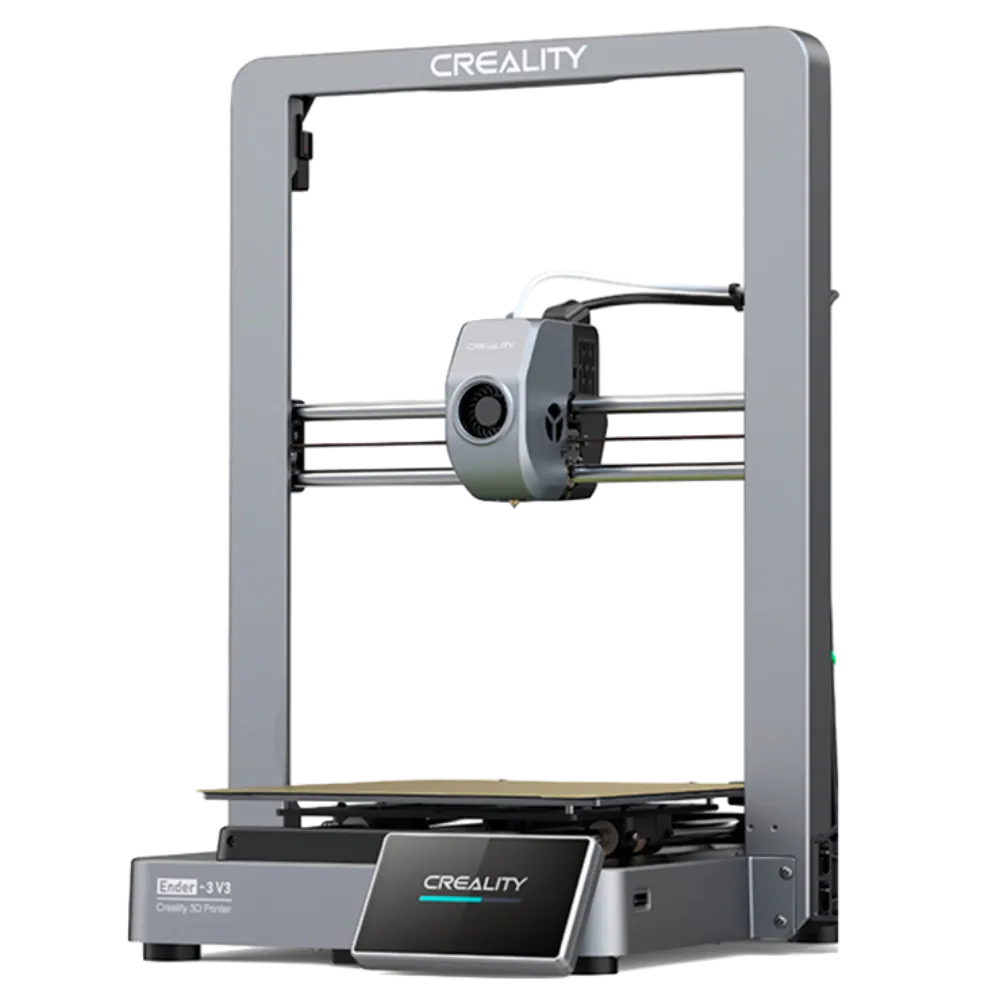
Creality Ender-3 V3
AVOIDFirmware support appears inactive, with no meaningful update signal for over a year.
Data refreshed: 16 May 2026
Where to buy
Specifications
- Build volume
- 220x220x250 mm
- Build size class
- Medium - Daypack / Backpack
- Price
- €349 (solo)
- Enclosure
- Open frame
- Chamber control
- None
- Materials
- PLA (all variants) · PETG · PHA · TPU · TPE
- Support materials
- —
- Bowden nozzle
- —
- Max hotend temp
- 300°C
- Max bed temp
- 110°C
- Max chamber temp
- —
- Nozzle material
- Hardened Steel
- Hardened nozzle
- Included — CF/GF abrasive variants
- Nozzle count
- 1
- Max filament inputs
- 1
- True multi-material
- —
- Tool change
- Single Nozzle Pause Swap
Ownership
- Experience level
- Tinkerer
- Assembly
- Light Build
- Auto bed leveling
- Automatic
- Auto Z offset
- Yes
- Auto first layer
- —
- Runout sensor
- —
- Spaghetti detection
- —
- Error guidance
- Generic
- Warranty
- 3-12 months
- Spare parts
- Minimal
- Firmware version
- V1.2.3.28
Who this is for
The Ender-3 V3 suits an experienced user who wants a Klipper-based open ecosystem and is comfortable maintaining a printer without ongoing manufacturer support. Buyers who already own this printer face a different decision than those purchasing new at retail — the timing concern applies to new purchases, not to continued use of an existing unit. Those expecting active firmware development, consistent manufacturer engagement, or a material range beyond what an open-frame machine reliably delivers should consider alternatives where manufacturer investment is still active.
PrintSignals Review
Creality Ender-3 V3 Review
Assessment
The hardware may function well mechanically — the concern for new buyers is purchase timing, not machine quality. Firmware development appears to have ended, with no updates recorded in over a year. The model's lifecycle position places it near the point where Creality products statistically see reduced manufacturer activity, based on a brand average of roughly 2.5 years — no official replacement has been announced, but this pattern carries weight as a timing risk. Creality's support quality varies by product line, and buyers entering at retail now are most likely doing so at or past the point of peak manufacturer investment in this model.
Build and print volume
The build area measures 220x220x250 mm, a medium footprint suited to parts within that volume. The manufacturer-stated hotend ceiling is 300°C and the bed ceiling is 110°C. The open-frame design means the print area is fully exposed to ambient room conditions — without thermal containment, print stability is influenced by surrounding temperature and airflow. That environmental exposure is the primary constraint on reliable material range, not the temperature specifications themselves.
Material capability
The reliable material range covers PLA in all variants, PETG, and PHA — the stock hardened steel nozzle extends that to abrasive-filled composites such as carbon fiber and glass fiber variants. The direct drive extruder adds hardware capability for flexible filaments including TPU and TPE, though these are technically demanding materials and tuning is a real factor in achieving results. Multi-color printing uses a single nozzle with manual pause-and-swap — each color change requires active filament unloading and reloading by hand, not passive monitoring. Cross-contamination risk applies to any material combination through the single nozzle, limiting reliable mixed-material use.
Setup and ownership
This printer suits experienced users who are comfortable with Klipper-based firmware, routine calibration, and finding their own path through problems. Initial setup is minor — typically 15 to 45 minutes of mechanical assembly. Automatic bed leveling and Z-offset calibration reduce day-to-day setup friction, but error guidance is limited to generic text or raw firmware output with no structured code system. Diagnosis falls to the user, supported by community resources and wikis rather than manufacturer tooling.
Support and longevity
Official spare parts availability is limited to a small selection in the official store — parts outside that list may require direct contact with manufacturer support. The warranty runs 3 to 12 months depending on the component, and official support coverage is inconsistent across warranty handling, parts access, and resolution quality. Official responses to hardware problems show limited transparency, with community-sourced fixes tending to fill the gap. The ecosystem is fully open, compatible with any slicer and community-modifiable firmware — providing access to broad resources that partially offset the gaps in official coverage.