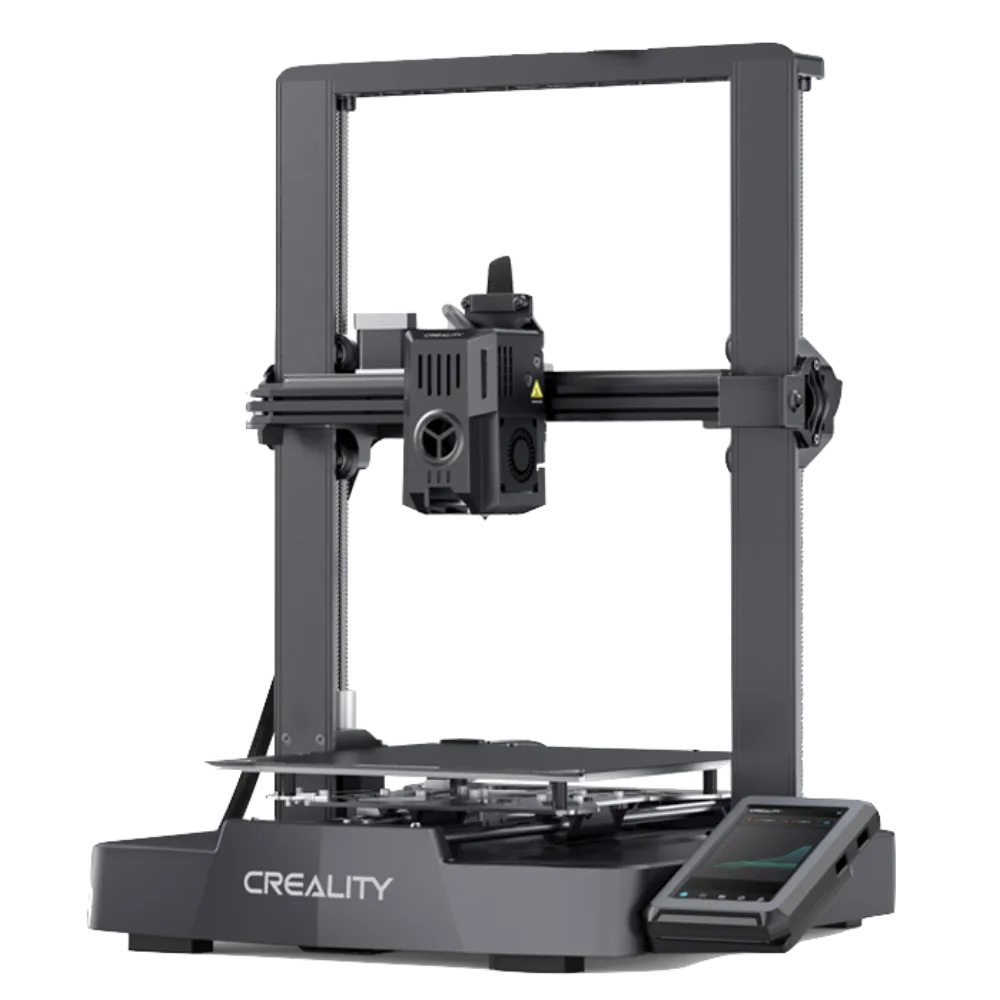
Creality Ender-3 V3 KE
CAUTIONFirmware updates appear to be slowing down, with no recent update signal in over 6 months.
Data refreshed: 16 May 2026
Where to buy
Specifications
- Build volume
- 220x220x250 mm
- Build size class
- Medium - Daypack / Backpack
- Price
- €239 (solo)
- Enclosure
- Open frame
- Chamber control
- None
- Materials
- PLA (all variants) · PETG · PHA · TPU · TPE
- Support materials
- —
- Bowden nozzle
- —
- Max hotend temp
- 300°C
- Max bed temp
- 100°C
- Max chamber temp
- —
- Nozzle material
- Copper
- Hardened nozzle
- —
- Nozzle count
- 1
- Max filament inputs
- 1
- True multi-material
- —
- Tool change
- Single Nozzle Pause Swap
Ownership
- Experience level
- Tinkerer
- Assembly
- Light Build
- Auto bed leveling
- Automatic
- Auto Z offset
- Yes
- Auto first layer
- —
- Runout sensor
- —
- Spaghetti detection
- —
- Error guidance
- Generic
- Warranty
- 3-12 months
- Spare parts
- Minimal
- Firmware version
- 1.1.0.17
Unlockable capabilities
- With hardened nozzle upgrade:
- Abrasive materials
Who this is for
The Ender-3 V3 KE works well for experienced hobbyists who are comfortable with Klipper-based systems and treat tuning as part of the process. It is a capable platform for PLA, PETG, and flexible-material work, for buyers who are willing to engage with the community when problems arise. Buyers who need long-term manufacturer support, reliable spare parts access, or engineering-grade material capability will find the lifecycle position and support pattern add meaningful risk to a purchase made today.
PrintSignals Review
Creality Ender-3 V3 KE Review
Assessment
The Ender-3 V3 KE is a capable printer with a direct drive extruder and Klipper-based firmware. The concern is timing: most models in Creality's lineup statistically reach a point of reduced activity and eventual replacement at this stage, though no official replacement has been announced. Firmware updates have slowed over the past several months, and Creality's support track record is inconsistent across its product lines. Buyers should consider whether the hardware capability is worth purchasing into a potentially narrowing support window.
Build and print volume
The 220x220x250 mm build area is a practical mid-size workspace, suitable for most hobby and functional PLA or PETG parts. The open-frame design provides no thermal containment. The manufacturer-stated hotend ceiling of 300°C and bed ceiling of 100°C describe hardware potential, not reliable operational range. Without enclosure, ambient temperature variations directly affect print conditions, limiting reliable use to materials that tolerate open-air environments.
Material capability
PLA in all variants, PETG, and PHA are the printer's reliable core materials, with abrasive filaments requiring a hardened nozzle upgrade since the stock copper nozzle is not rated for that use. The direct drive extruder adds hardware capability for flexible materials like TPU and TPE, though flexible printing is technically demanding and results depend on tuning. Multi-color printing requires hands-on filament swapping at each color change. This is not true multi-material capability, and cross-contamination risk applies to any material combination.
Setup and ownership
This printer suits buyers who are prepared to engage with Klipper-based firmware, where tuning, calibration, and debugging are routine parts of the ownership experience. Initial assembly requires minor mechanical setup, typically completed within 15 to 45 minutes. Automatic bed leveling and automatic Z-offset calibration reduce a common source of daily friction. Error messages are generic, offering no structured guidance, and diagnosing problems typically requires independent research or community support.
Support and longevity
Very few spare parts are listed in the official store, and items not found there may require contacting manufacturer support directly to source. Warranty coverage runs 3 to 12 months depending on the component. Official responses to hardware problems have generally been limited, and community resources have tended to fill that gap more reliably. The ecosystem is fully open: standard G-code, compatibility with any slicer, and unrestricted community modification provide long-term flexibility that does not depend on the manufacturer's continued attention.