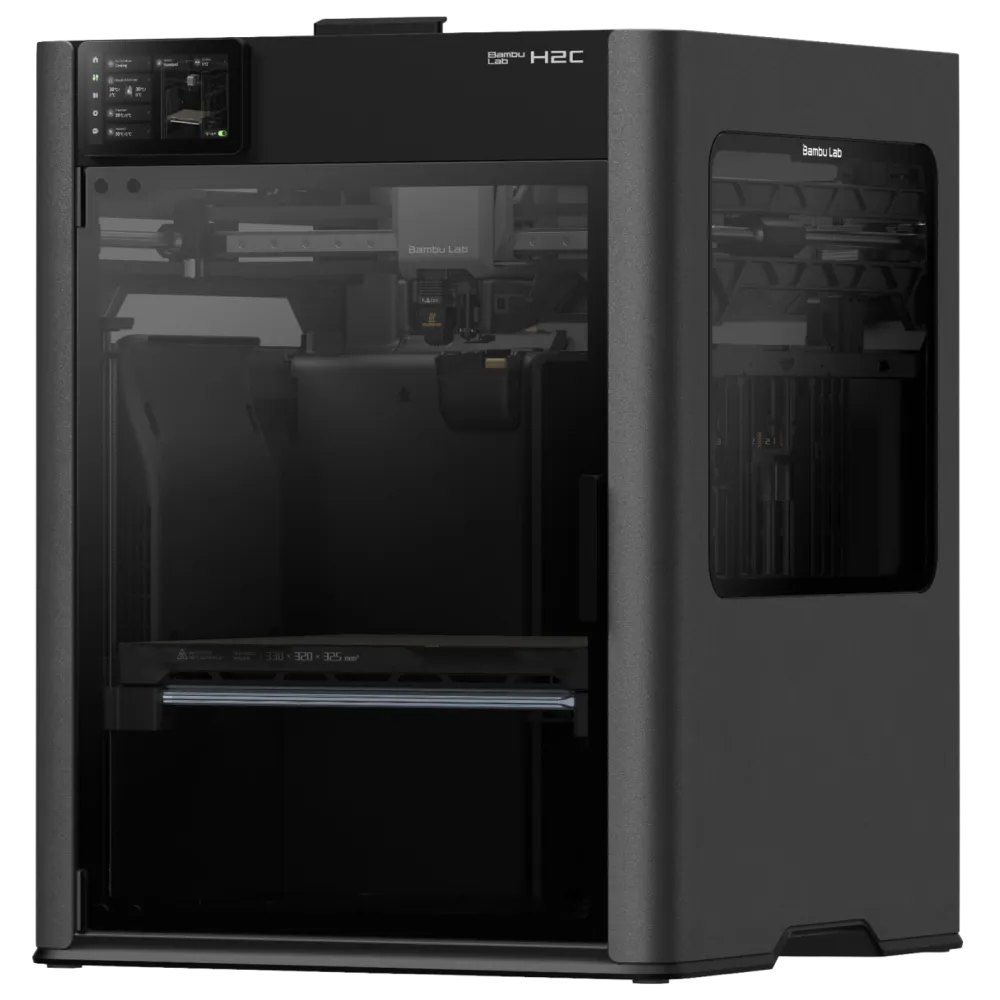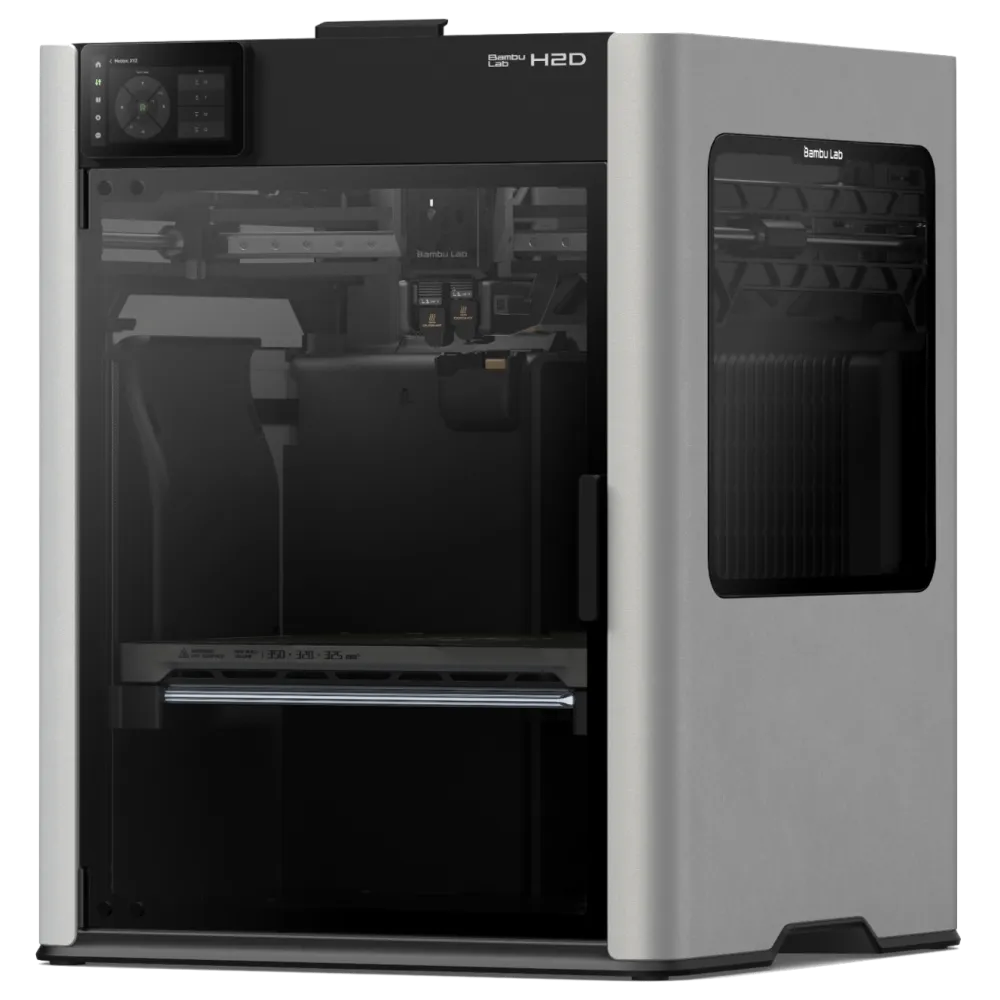
Bambu Lab H2D
BUYNo major lifecycle, firmware, availability, or support warnings detected.
Data refreshed: 16 May 2026
Where to buy
Specifications
- Build volume
- 350x320x325 mm
- Build size class
- Large - Carry-on Suitcase
- Price
- €1,749 (solo)
- Enclosure
- Full enclosure
- Chamber control
- Active Controlled
- Materials
- ABS · ASA · HIPS · Nylon (PA6/PA12) · PC · PC-ABS · PETG · PHA · PLA · PPS · PVB · TPU · TPC · TPE
- Support materials
- PVA · PVOH · BVOH as simultaneous support material
- Bowden nozzle
- —
- Max hotend temp
- 350°C
- Max bed temp
- 120°C
- Max chamber temp
- 65°C
- Nozzle material
- Hardened Steel
- Hardened nozzle
- Included — CF/GF abrasive variants · Nylon-CF · PAHT-CF · PC-CF
- Nozzle count
- 2
- Max filament inputs
- 25
- True multi-material
- Yes
- Tool change
- Dual Nozzle Purge Based
Ownership
- Experience level
- Intermediate
- Assembly
- Minimal
- Auto bed leveling
- Automatic
- Auto Z offset
- Yes
- Auto first layer
- Yes
- Runout sensor
- Yes
- Spaghetti detection
- Yes
- Error guidance
- QR Direct
- Warranty
- 3-12 months
- Spare parts
- Comprehensive
- Firmware version
- 01.03.00.00
Who this is for
The H2D suits buyers who need a large-format engineering-materials printer with dual-nozzle multi-color capability and are comfortable working within a closed, tightly integrated ecosystem. Users who prioritize open-source firmware, unrestricted third-party slicer access, or open integration workflows will find the ecosystem a persistent constraint. Multi-color capability requires the multi-spool add-on, which is priced separately and is not included in the base configuration.
PrintSignals Review
Bambu Lab H2D Review
Assessment
The H2D sits mid-cycle with no imminent replacement, and firmware has been updated within the last 90 days. Based on available evidence, Bambu Lab's support responsiveness is the strongest observed, with the manufacturer publicly taking ownership of hardware problems and following through with official fixes. Together, these reduce the timing and support risks that commonly accompany higher-end purchases. The two factors most worth clarifying before purchase are ecosystem fit and whether multi-color capability aligns with the intended use case.
Build and print volume
At 350x320x325mm, the build area accommodates large practical parts across most use cases. The full enclosure retains heat throughout a print, which reduces warping risk and makes reliable engineering material printing possible. The actively controlled chamber holds up to 65°C, which is required for consistent results with materials like PC and Nylon that are sensitive to ambient temperature fluctuation. A 350°C hotend and 120°C bed temperature ceiling serve the full material range this printer supports.
Material capability
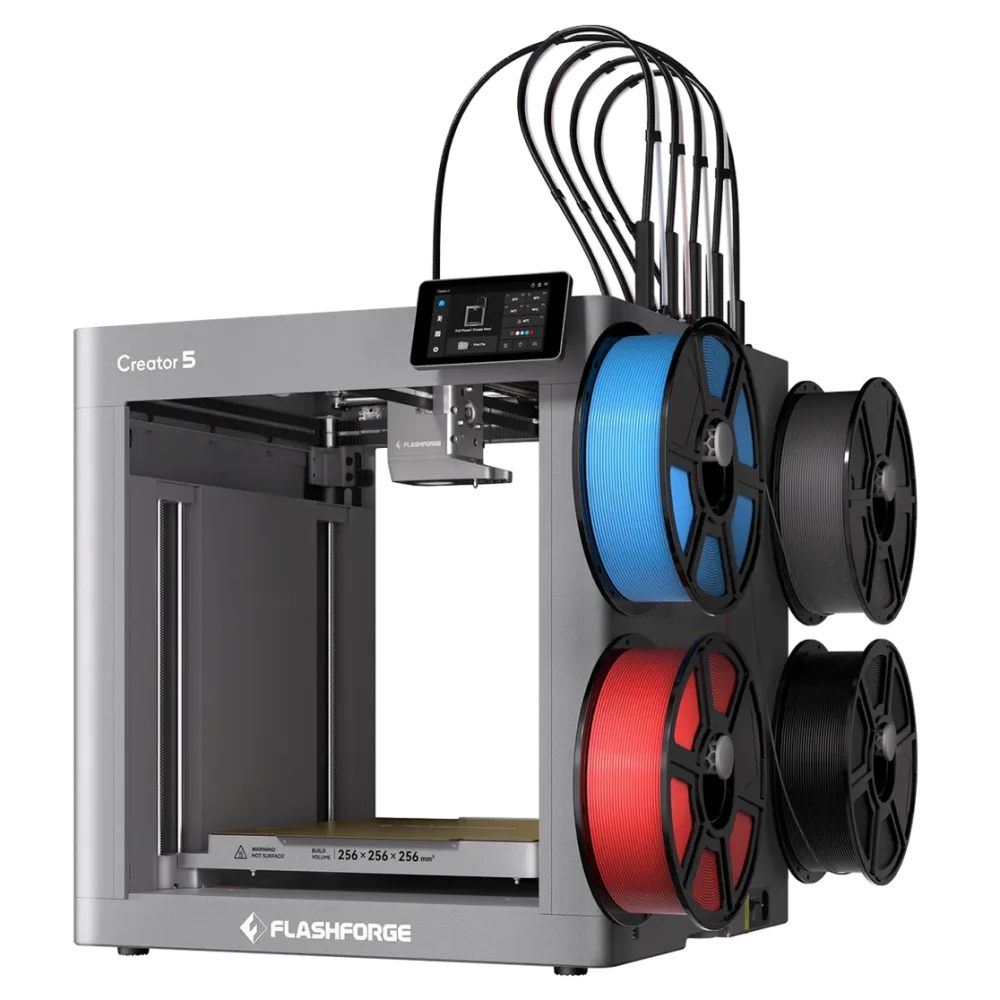
Multi-color printing requires the multi-spool system, a separately purchased add-on that brings the base printer's single filament input up to 5 inputs, scalable to 25, with automatic spool handoff for long unattended prints. The base material range covers ABS, ASA, Nylon (PA6/PA12), PC, PETG, PLA, and more, with the included hardened steel nozzle supporting CF and GF abrasive variants. Flexible materials including TPU, TPC, and TPE are hardware-supported via direct drive, though results are tuning-dependent. With the add-on, dual dedicated nozzles use purge-based transitions at moderate swap times and unlock stable simultaneous printing with PVA, PVOH, and BVOH as support materials.
Setup and ownership
The intermediate ownership rating reflects capability scope rather than operational complexity, with tightly integrated hardware, software, and slicer delivering a consistent first-print experience. Out-of-box setup requires removing holding screws and connecting a few parts, with first print typically reached in under 15 minutes. Automatic bed leveling, Z-offset calibration, first-layer calibration, runout detection, and failure detection handle routine checks without manual input. On-screen QR codes link each error to its specific fix, keeping most issues resolvable without external support.
Support and longevity
Spare parts availability is comprehensive, with a wide selection accessible directly from Bambu Lab. Warranty coverage runs 3 to 12 months depending on the component. Bambu Lab has published a software support commitment extending to 25 March 2030, providing buyers a defined floor for ongoing development. The ecosystem is closed, meaning proprietary firmware limits third-party tool access and the workflow is optimised around Bambu Lab's own slicer and consumables.